Small Tools, Big Conversations: Using Creative Prompts to Build Meaningful Connection and Communication in Care
Time pressures, emotional demands and the pace of day-to-day responsibilities in care environments can make it harder for people to open-up about how they’re really feeling or what they truly need.
At My Home Life England, we believe that creating space for reflection and connection is essential to quality of life — not only for people who draw on care and support, but for relatives, staff, and leaders. This belief is shaped by over 20 years of evidence and informed by our core frameworks, which place relationships, listening, and shared understanding at the heart of good practice.
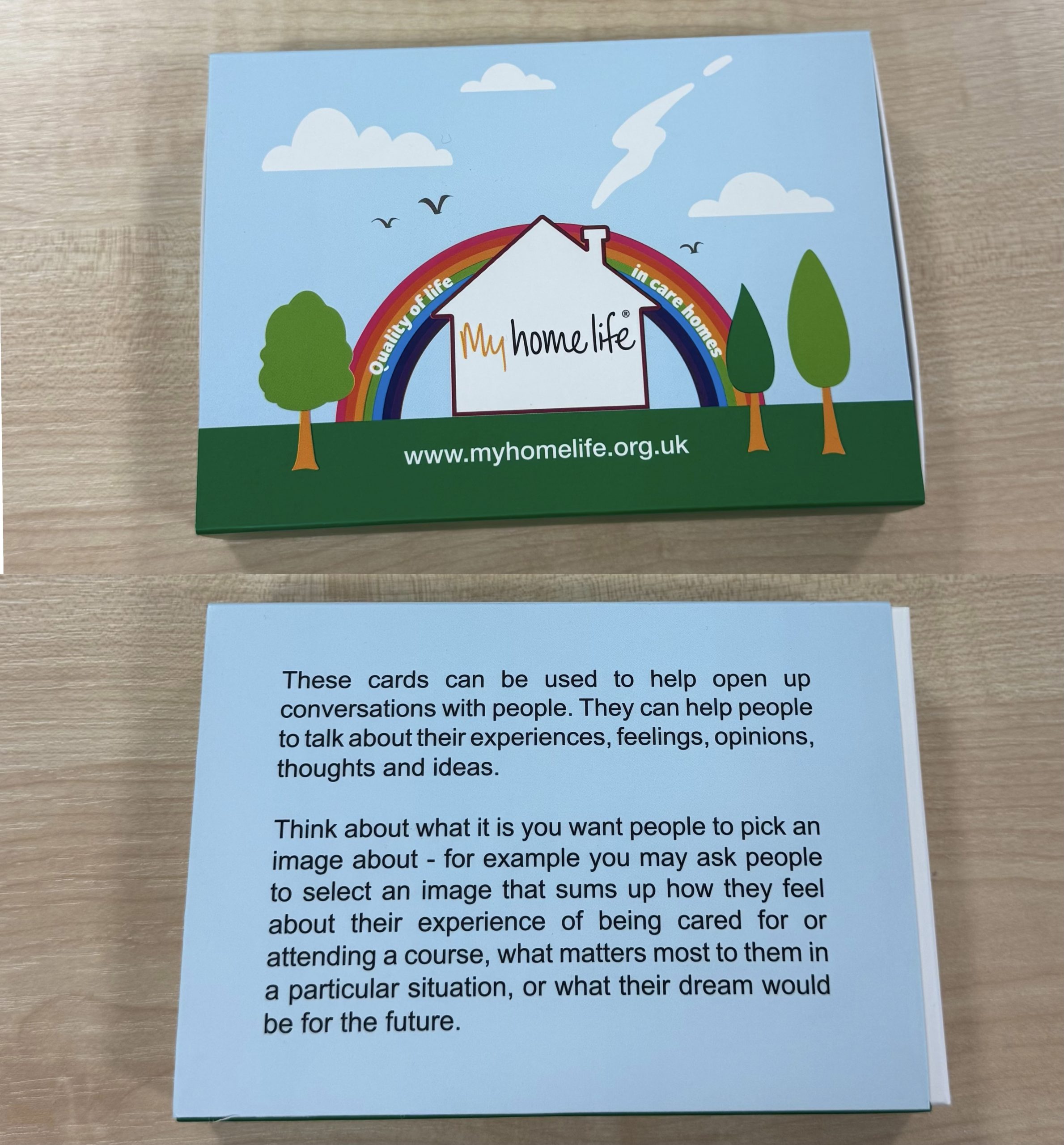 One of the simplest ways we bring these values to life is using postcards (or flashcards) as reflective prompts.
Used across our leadership programmes, in supervisions, and workshops, these cards invite people to pause, choose an image, and use it to express something that matters to them — a memory, a feeling, a hope, a worry, or a dream for the future. What begins as a picture often leads to a deeper, more human conversation.
Listening Differently: What Postcards Teach Us
In care settings, like many workplaces, conversations can easily become focused on tasks, problems or outcomes. Creative prompts offer a gentle way into the deeper conversations that people often want to have, but don’t always know how to begin.
Rather than asking people to find the right words straight away, a postcard gives them something to respond to. The image becomes a starting point — making it easier to talk about what feels important, without feeling put on the spot.
We see this regularly in our work with care leaders. People use the cards in different ways:
- to describe how they are arriving into a space
- to share challenges, they face but never voice
- to reflect on what matters most to them in their role
- to imagine the future they want to create for their teams and the people they support
What makes this simple exercise effective is not the card itself, but the space it creates. It helps build emotional safety, strengthens relationships, and supports the kind of trust that sits at the heart of compassionate leadership.
What we hear from leaders
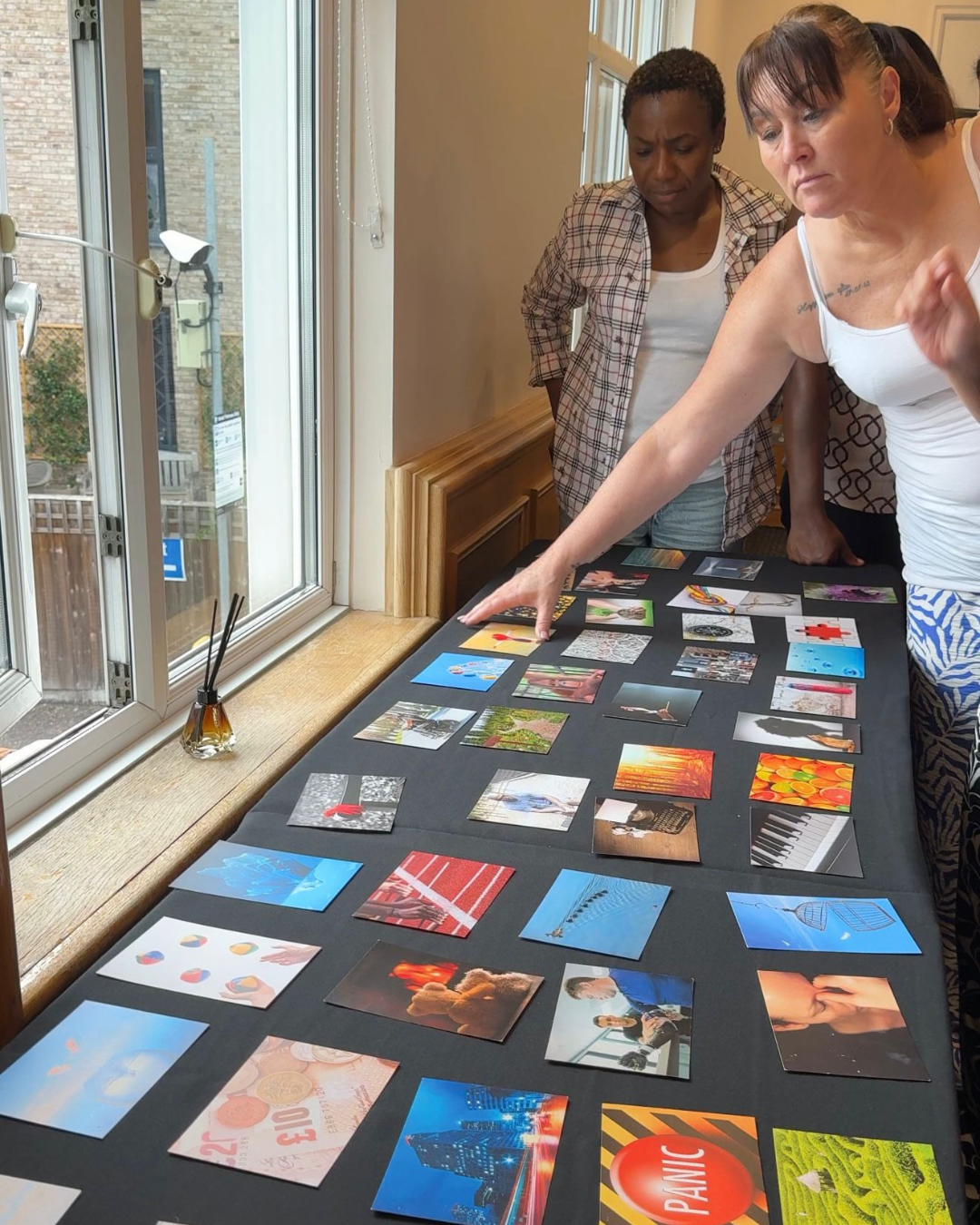
Using postcards to start conversations and meetings is often one of the first practices from our programmes that leaders take back to their own teams.
Care leaders have told us that they now use reflective cards during supervision sessions and informal check-ins not just to talk about work, but to understand how people are genuinely feeling. As Lisa, a participant on our Professional Development and Support Programme (PSDP) shared:
“The flashcards are very helpful. I now use them for conversations in teams and it doesn’t have to be about work. I use them to chat with my team to know how they are genuinely feeling.”
Another manager reflected on using the postcard exercise with their whole team:
“The session proved to be a truly emotive and reflective experience, giving everyone the opportunity to share their thoughts and personal stories. Although many of us have worked together for several years, we were still touched — and often surprised — by what we discovered about one another. It reminded us of the importance of listening, empathy, and genuine connection within our team. We left feeling more motivated, understood, and united in our shared purpose of delivering compassionate care.”
Leaders also told us that the postcards helped them navigate more challenging moments or reconnect their teams around shared values:
“I’ve used the postcards in staff meetings when there was a lot of tension in the team — it helped them to reconnect and understand each other’s point of view. Using the postcards with the team reminded everyone of our shared values and what we come into work for every day. I feel we’ve more patience and empathy as a team.”
These moments are at the heart of relationship-centred leadership. They show what becomes possible when people feel safe enough to share their stories.
Why This Matters
Our work at My Home Life England is grounded in a strong evidence base that shows how deeply relationships shape quality of life for people who draw on care, their families and for those who support them.
Practices that encourage reflection and listening help nurture key human experiences: feeling safe, feeling valued, feeling connected, and feeling that you matter. These are essential for compassionate leadership and for sustaining caring cultures.