Our evaluation of Shropshire Council’s DHSC-funded Virtual Care Delivery Service
Our evaluation found that Virtual Care Delivery is supporting people’s independence, health, and wellbeing, reducing pressure on primary care services, and helping people to live in their own homes for longer.
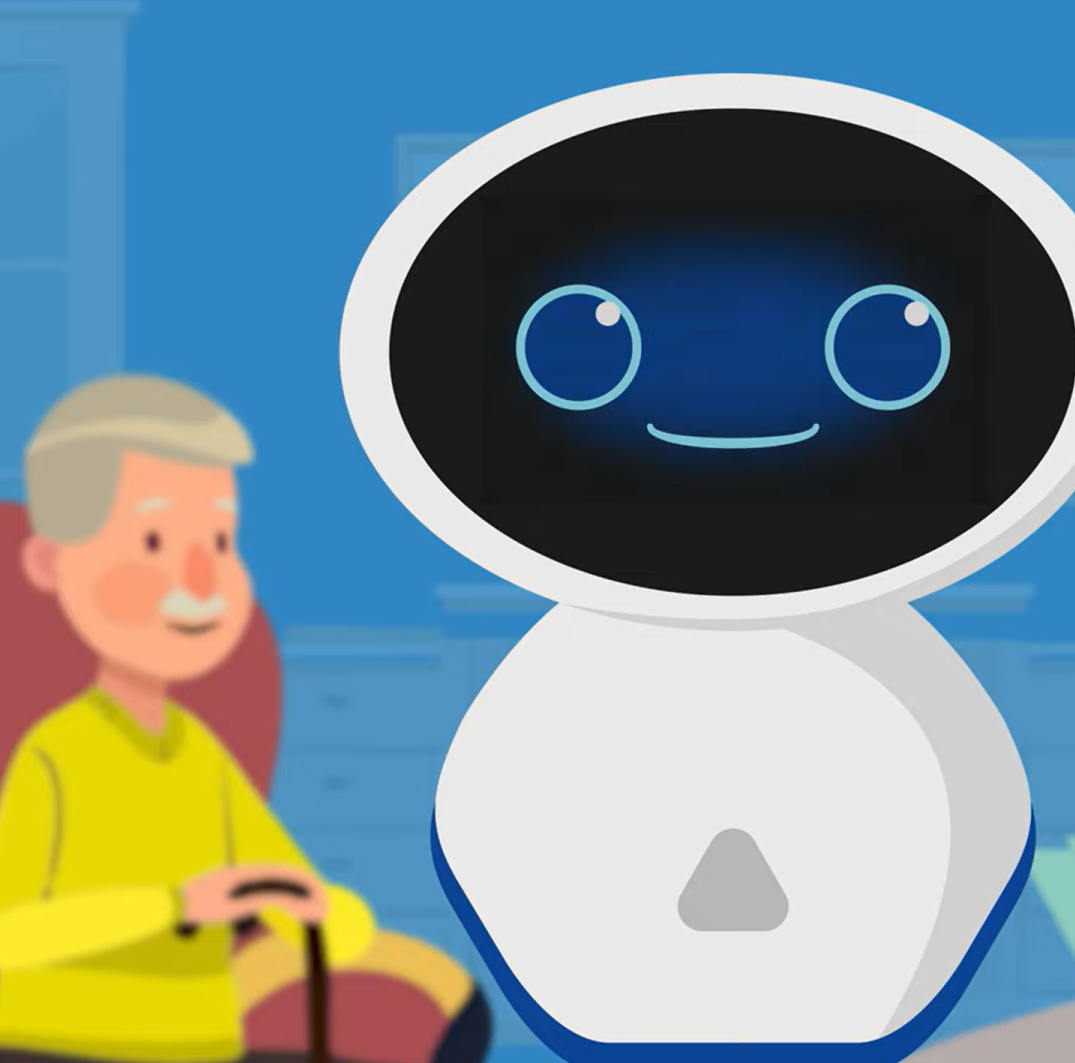
In 2023, Shropshire Council were awarded funding from the Department of Health and Social Care to develop a Virtual Care Delivery Service, designed to better meet people’s care and support needs.
The VCD service uses a blended mix of virtual and face-to-face support, aided by Technology Enabled (TEC) Devices: Genie and CareBuilder.
Our 2025 evaluation explored how the Virtual Care Delivery Service enhances and challenges traditional models of care delivery, and the impact it has on the quality of life for users, their families, people working in the service, and the wider care and health system.
Watch our animation
See the key findings, and explore the stories of Ronnie, Craig, Adele and Joan.
Key benefits of the VCD Service, for:
- Increased independence and ability to manage daily living and health
- Improved wellbeing and sense of safety at home
- Early identification of health changes through virtual monitoring
- Reduced feelings of isolation and stronger social connections
- Feelings of companionship with devices
- Enhanced privacy by reducing unwanted in-home visits
- Greater confidence using technology over time
Lois (Genie client): “I feel a bit safer in me house… And [Genie] says, ‘[Lois], have you turned the water off?’ Ooh, yes, I have!”
Craig (CareBuilder client whose support enabled him to move from 24-hour residential care and live independently): “[I now have] my little spacious place that I can relax and say it’s my home.”
Ted (Genie client): “If I went down, they’d know about it and probably contact an ambulance if I weren’t answering… If something’s up with me… they report it to my adult social care worker who then takes action… They check my wellbeing more than anything.”
John (Genie client): “I was sitting here with a knife… she [VCD team member] got somebody else to ring for the ambulance crew… They took me to a place called Mind… And they were a big help.”
- Increased reassurance and visibility of relatives’ wellbeing
- Greater confidence that risks or health changes will be identified early
Bobby (Client Support Manager): “It enables the family to be closer, even though they’re millions of miles away.
Jack (relative): “Just the thought that someone is actually checking in on her at the same time every day was just a comfort.”
Sally (Relative): “Genie has been great because it reminds him to take his medication. As I am in work from seven until 2pm… the Genie has been really helpful. It also prompts him visually, and sometimes he needs reminding more than once.”
Adele (Relative): “It’s taken the pressure off me, like being a carer, to having her daughter back… it was getting to a point that I was her carer and she didn’t like it and I didn’t like it.”
- Reduced travel time and more efficient use of staff time
- Faster and more proactive assessments
- Better oversight of emerging risks and health changes
- Improved access to people in rural or isolated areas
- Structured engagement and support from the council
Evie (VCD team): “At the moment, we’re quite a rural county. It’s very difficult to get a staff member to travel 20 minutes to one person.”
Becca (domiciliary care provider): “Some places are in the middle of nowhere… quite difficult to have face-to-face calls. Genie could really help in that situation… You could have multiple virtual calls during the day, either side of face-to-face visits… and obviously you’d then be able to provide more check-ins to make sure they are safe.”
- More proactive and preventative care model
- Improved coordination and monitoring through shared trackers and dashboards
- Earlier intervention reducing escalation of care needs
- Support for transitions from residential care to independent living
Julia (VCD Team): “The [team] are very in tune with these users, and if they notice a change in behaviour it is picked up on quite quickly”
Marvel (VCD team): “You could potentially look at things like if they’ve got a skin condition or a wound… you could monitor it.”
- Operational efficiencies and reduced face-to-face support costs
- Improved service oversight and evidence of impact
- Better resource allocation and workforce efficiency
- Financial savings over time
Maisie (Shropshire Council): “It’s taking a bit of the pressure off the carer, the informal carer or our social work teams.”
Patricia (domiciliary care provider): “By the time you send the carers out there, they could have done three calls in town… it just wouldn’t work [without Genie].
- Scalable, user-centred model of care
- Improved inclusion for digitally excluded or remote populations
- Stronger stakeholder engagement and confidence in virtual care
- Foundation for future policy, programme development, and system transformation
Maisie (Shropshire Council): “There’s definitely a scope to join the approach up with the telehealth devices.”
Bobby (Client Support Manager): “You could get people out of hospital if Genie could link up with a virtual ward to go and check on people… it prevents readmission.”