Improved outcomes through partnership working: A vision for social care
Our new report sets out a future for social care in which care providers are respected and engaged as equal partners within the health and social care system – working alongside statutory bodies to shape, deliver and improve services, with widespread positive outcomes.

The report draws on a two‑year inquiry supported by the Rayne Foundation, and brings together insights from 90 stakeholders across care, local government and health, a literature review, 11 case studies, and learning from My Home Life England’s work with more than 2,600 care leaders.
The evidence concludes that, where adult-to-adult relationships are prioritised and care providers are engaged as equal partners in the wider system, outcomes improve for everyone.

Full Report
Download the report

Executive Summary
See the key themes and recommendations

Case Studies
Explore 11 examples of promising practice
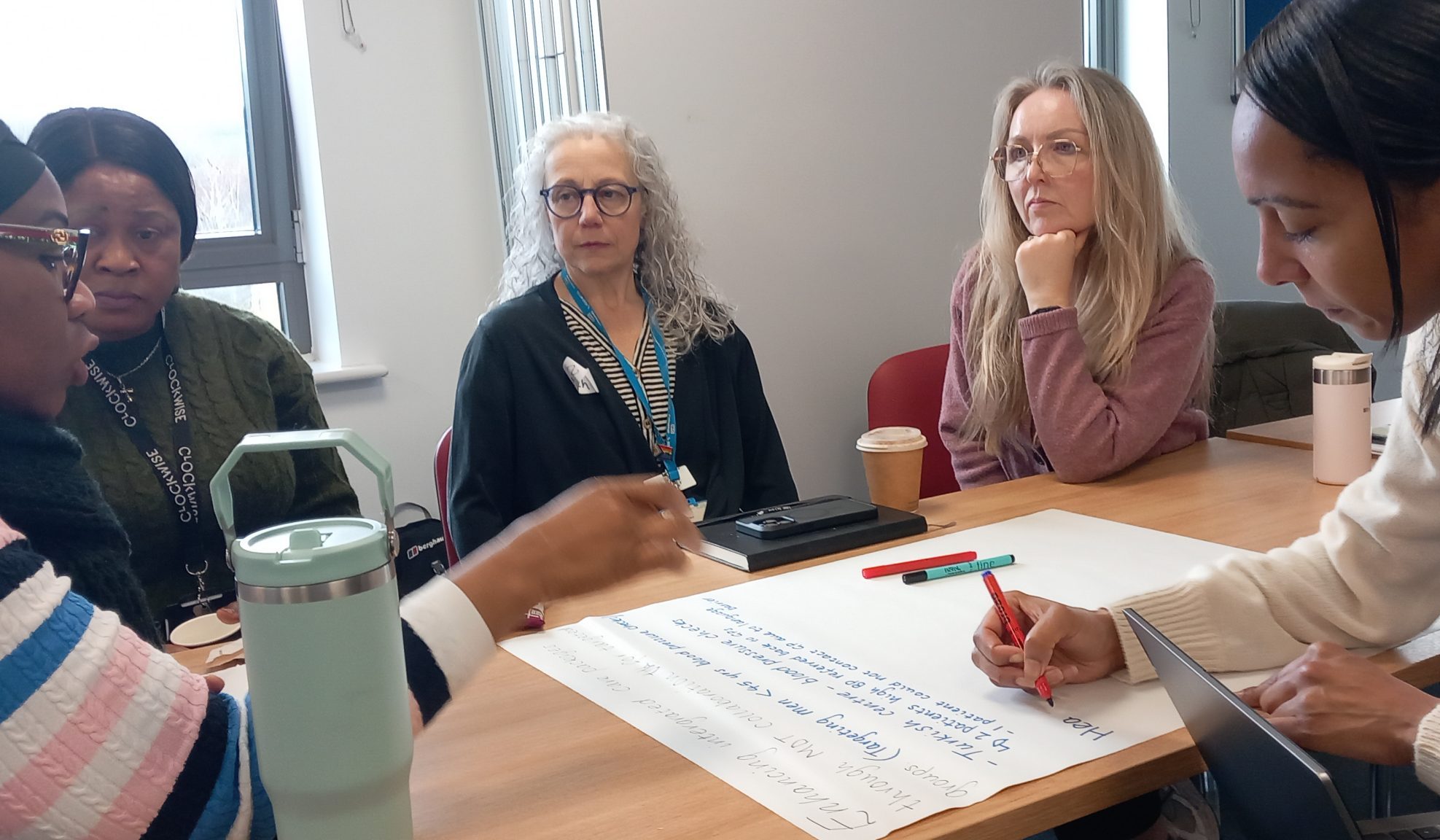
Adult-to-adult relationships: a vision for better collaboration
Despite ongoing attempts to integrate health and social care, many providers still experience significant power imbalances, feeling that decisions are imposed and their expertise overlooked.
Using the lens of Transactional Analysis, the report finds that current commissioning, safeguarding, and regulatory approaches can reinforce a ‘parent–child’ dynamic, leading to frustration and disengagement.
In contrast, we identified that adult-to-adult relationships are at the heart of good partnership working.
When relationships are rooted in respect and shared purpose, with people engaged as equals, mutual accountability, shared learning, and appreciation for each partner’s professional knowledge and values, the system becomes more effective, more sustainable, and capable of delivering significant outcomes for social care, including:
- Improved hospital discharge and reduced crises
- A more resilient and responsive care sector
- Better co-ordinated, relationship‑centred care, and improved outcomes for people drawing on care and support
Making it happen
The shift to relational partnership between the care sector and the wider system is already happening in some places. But to make it the norm, not the exception, we need deliberate cultural change across all parts of the system.
The report highlights a series of practical, relationship-focused recommendations, including:
- Embed mutually respectful, adult-to-adult dynamics as a guiding principle in system working.
- Recognise and resource the leadership of registered managers, and support future care leaders to develop a new vision for the care sector.
- Strengthen the role of local and national care associations and forums.
Case studies
The report spotlights 11 promising approaches across England and Northern Ireland, where a shift in relationships has led to positive outcomes:
Example: During the Covid-19 pandemic, Sefton invested in developing and supporting registered managers of care homes and built their confidence to engage with commissioners via the Care Home Cell. Post-pandemic, they redesigned the care provider forum giving registered managers more influence and time for reflection.
Outcomes: A culture of more equal partnership working has become embedded. While it is difficult to prove a direct causation, over 80% of care homes have a Good or Outstanding CQC rating.
Lessons learned: Investing in registered managers’ confidence and skills helped them become stronger leaders and more effective system partners. Redesigning care provider forums to be chaired by care managers, with time for peer support and shared agenda-setting, fostered genuine collaboration.
Example: A nursing home in the Midlands, already working closely with the local NHS Continuing Healthcare (CHC) team, helped shape a more flexible approach to commissioning. The registered manager recognised that rigid staffing models were not responsive enough for someone with complex, fluctuating needs.
By building trust and sharing insights from the front line, the provider and CHC team co-designed a more adaptable funding arrangement. The council’s adult social care team also worked differently, responding to safeguarding concerns through dialogue rather than defaulting
to compliance.
Outcomes: The individual received more personalised care, and the ICS saved approximately £50,000 per year, per person.
Lessons learned: Adult-to-adult partnerships are rooted in trust, mutual respect and flexibility, enabling joint problem-solving and a shared approach to risk.
“As a provider we specialise in meeting the needs of those with very advanced dementia, which is an extremely complex area to get right.
By working collaboratively with our commissioners we were able to agree a model of care that ensured that our residents’ needs were effectively met, whilst saving the commissioners money and saving on the number of staff required to deliver care.
In our sector’s current reality of limited funding and limited staffing these kinds of collaboration will be key in ensuring that the limited resources can meet the level of need within our society.”
Charles Taylor, CEO, Taylor and Taylor Care
Example: In one South West county, the local care association is seen as a strategic partner. Council leaders, care providers, NHS partners and others invested time in building trust – through one-to-one discussions and a shared recognition of providers’ limited capacity.
Financial support was agreed to enable providers to participate fully. Leadership development, including system shadowing and board roles, created future care leaders who could contribute meaningfully to the ICS.
Outcomes: The care association now manages its own workforce strategy aligned with the ICS People Plan, leads the Trusted Assessor programme, supports health promotion, and provides early warnings on market risks.
Lessons learned: Strong adult-to-adult relationships are built on trust, financial fairness, inclusive leadership and clear roles – enabling more effective and sustainable system working.
Example: Care Providers’ Voice (CPV), a care association formed during the pandemic, has become a trusted partner to all seven Northeast London boroughs.
From April 2024, local authorities agreed CPV would lead on several core programmes. This shift reflects a strong culture of mutual respect and shared purpose. CPV coordinates directly with councils to lead recruitment, provide sector intelligence, and support cost-effective training across the region.
Outcomes: CPV’s leadership has improved recruitment outcomes, widened training access, and enabled better insight sharing. Their input has strengthened contract specifications and raised the profile of the provider voice in system decisions.
Lessons learned: Adult-to-adult partnerships flourish when care providers are trusted to lead. Delegating responsibility builds ownership, strengthens collaboration, and ensures real-time system insight.
“CPV welcomes and supports the case for change outlined in this excellent report. At a time when all parts of the Health and Social Care system are under financial stress, it is important that we focus on building relationships and knocking down barriers to deliver truly integrated, seamless, high quality care for our residents.
Too often the missing piece of the jigsaw is social care providers who have a distinct, but important voice in shaping the services of the future.”
Mike Armstrong, Co-Chairman, Care Providers’ Voice
Example: Hertfordshire Care Providers Association (HCPA) is a well-established, independent association supporting over 760 providers. With more than 70 staff, it delivers training, mentoring, recruitment, inspection support, and a telephone helpline.
Funded through a council contract but organisationally independent, HCPA facilitates inclusive engagement through forums, surveys and meetings. It gathers and shares insight across the whole sector – from homecare to residential – without favouring any provider group.
Outcomes: HCPA resolves issues early, reducing pressure on the council. It supports NHS-aligned training and shares intelligence from care staff, families and clients to inform faster, more responsive system decisions.
Lessons learned: Adult-to-adult working benefits from impartial representation, mutual trust, and clearly defined roles. Independence enables honest dialogue and helps align local authority and provider priorities.
“In Hertfordshire, after 17 years, we know partnership between the Local Authority and Care Association works when it is done well.
Our Association is made up of independent staff with a wealth of past care experience and this means our Local Authority and other Strategic Partners can converse with us on all areas of care with no concern for any conflict of interest as no one in our Association works for a care provider, our job is to act on their behalf and get the very best deal which serves the needs of the majority not the minority.
We hugely appreciate this report as it looks at the very best in terms of partnership working and highlights the importance of ‘independent, strategic connectors’. This model requires investment both in monetary and relationship-building terms”.
Sharon Davies, Chief Executive, HCPA
Example: In 2023, Dorset Care Association launched an independent Trusted Assessor service with Dorset Council and the ICS.
Assessors – often former care managers – work for providers, not the hospital discharge team. They review medical notes, attend ward rounds, coordinate welfare checks and discharge logistics, and ensure care providers are informed and confident before accepting people into their services. The service operates six days a week, with tailored support for people with complex needs.
Outcomes: More than 2,500 discharges have taken place with no failed placements or readmissions. The service is now seen as essential and is being rolled out in new areas.
Lessons learned: Clear roles, sector expertise and mutual trust underpin effective adult-to-adult partnerships. Independence and credibility ensure safe, timely, person-centred hospital discharges.
“We consider ourselves to be very fortunate with regards to the relationship that the Dorset Care Association has developed with Dorset Council, the ICB and the Dorset 1 and Dorset 2 CQC Inspection teams. Our membership is fully funded by Dorset Council as they recognise the importance of collaboration, support for providers and other associated members and ensure that discussions around significant matters such as fee uplifts, frameworks, commissioning matters and any other issues that will ultimately impact upon the people we care for.
The approach is joined up, inclusive, considered and never confrontational. This has resulted in a high level of interaction, attendance and ever increasing membership which continues to create positive and impactful engagement between all parties which ultimately benefits individuals using our services.
There are genuine friendships, kindness and respect between all parties which we are able to evidence via our well attended meetings and webinars, KPI’s showing our social media and emails opened and read and regular requests for help and support. It has been pleasure working on this project and sharing how positive working can benefit all parties.”
Anna Knight, Chief Executive, Dorset Care Association
Example: South Warwickshire NHS Trust reshaped its approach to care home engagement through the Enhanced Health in Care Homes Model. Previous working groups included only health system representatives, and early efforts to involve care homes failed.
A second recruitment round, with a more positive tone, succeeded in engaging a few registered managers. One challenged the group to “talk about what’s going well” – prompting a shift toward sharing good practice.
Outcomes: A Collaborative Group now includes registered managers as co-leaders. This has improved understanding, engagement and shared solutions across the system.
Lessons learned: Adult-to-adult partnerships grow when care homes are treated as equal contributors. Highlighting strengths, not just problems, builds confidence and genuine collaboration.
“Our work with Warwickshire care homes demonstrates that meaningful transformation happens when adult-to-adult relationships are at the heart of partnership working. By placing care home managers at the centre of the Enhanced Health in Care Homes programme, we shifted from problem-focused discussions to a strengths-based, collaborative approach. Their practical insight reshaped our priorities, and enabled more coordinated, responsive, person-centred care for residents.”
Elaine Hodges, Programme Manager for South Warwickshire University NHS Foundation Trust
“As professionals together we can do so much. When there is teamwork and collaboration, wonderful things can be achieved.”
Sam Chater, Regional Operations Director, Runwood Homes
Example: The West Midlands Care Association (WMCA) noted a stark contrast between local authorities – with one standing out for its consistently open, respectful and responsive engagement.
A regular Strategic Providers Group created space for genuine dialogue, with senior, stable leadership from the council. The local authority was clear about its remit and honest about limitations. When concerns were raised, it followed up – often conducting deeper dives to understand harder-to-reach providers.
Outcomes: The result was a more confident, collaborative provider community. WMCA became a trusted intermediary between the sector and commissioners.
Lessons learned: Adult-to-adult relationships are built through consistent leadership, transparency, and trust in intermediary organisations to amplify provider voices safely and constructively.
Example: My Home Life Northern Ireland (MHL NI) worked with registered managers who, in the very early stages of the My Home Life NI programme (2014/2015), described their relationship with the regulator – RQIA – as formal and exclusively focused on the inspection process.
MHL NI invited a senior inspector to a leadership support workshop, creating a non-inspection space for open conversation. This began an honest dialogue about confusion, myths and barriers. The regulator began attending regular MHL workshops and invited MHL NI to engage with a new initiative they were rolling out on Inspection Support Volunteers.
Outcomes: RQIA is now seen as a supportive partner and an important resource to support the work of care home staff. Registered managers feel more confident to speak openly, enabling earlier identification and resolution of issues.
Lessons learned: Adult-to-adult partnerships between regulators and providers depend on shared language, mutual respect and safe spaces for honest exchange – outside the context of judgement.
“The success of our MHL programme in Northern Ireland is directly attributable to the strong working relationships we have with all our project partners, and in particular to our relationship with RQIA.”
Assumpta Ryan, Professor of Ageing and Health, Ulster University, and Director, MHL NI
Example: The Better Security, Better Care programme helps adult social care providers manage data securely and complete the Data Security and Protection Toolkit (DSPT). A decentralised model was adopted from 2021, working through local care associations, and in some instance NHS partners, as Local Support Organisations (LSOs) who used an adult-to-adult, peer-based approach.
Outcomes: By June 2025, over 76% of providers had published a DSPT, up from 15% in 2021. Engagement improved significantly, even among smaller and hard-to-reach providers.
Lessons learned: Adult-to-adult engagement, rooted in local relationships, builds trust and confidence. National initiatives succeed when local partners are involved and they lead, listen, and speak the same language as providers.
Example: Lincolnshire redesigned its homecare model by appointing a lead provider in each of its 11 localities. These providers coordinate all care in their area and must subcontract at least 10% to others, sustaining a diverse market.
Weekly virtual meetings bring providers and professionals together to focus on individual needs and safe discharges. Direct communication replaces intermediaries, enabling fast, collaborative responses.
Outcomes: Discharges are more timely and coordinated. Providers and health professionals work more closely, taking shared responsibility for managing risks and keeping people at home when possible.
Lessons learned: Trust, shared accountability, and direct dialogue are the foundation of adult-to-adult working. When professionals coordinate as equals, system responses become faster, fairer and more person-centred.
“Working together with our commissioners has enabled home care providers to make the most of the skills of their staff team, to deliver responsive, person-centred care to local citizens”.
Melanie Weatherley MBE, Chair, Lincolnshire Care Association

Join the conversation
This new report shines a light on the outcomes that can be achieved through positive partnership working between care providers and the wider system.
Everyone involved in health and social care – commissioners, providers, regulators, policymakers – has a part to play in creating more equitable and effective relationships.
We invite you to share with us your reflections on the report, and your expertise on how we can make this better future for social care a reality.

This work was funded by Rayne Foundation. We are very grateful for their support.